Why Passport Authorization Requires Notarization
Why Passport Authorization Requires Notarization
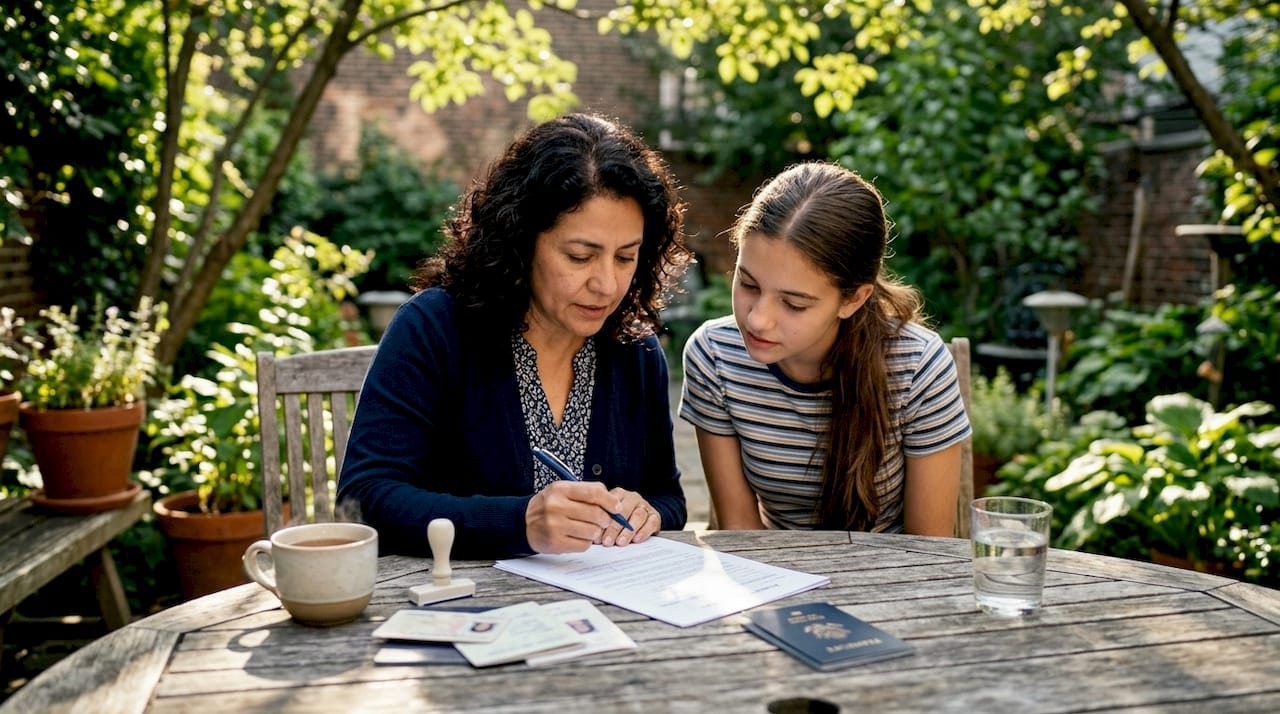
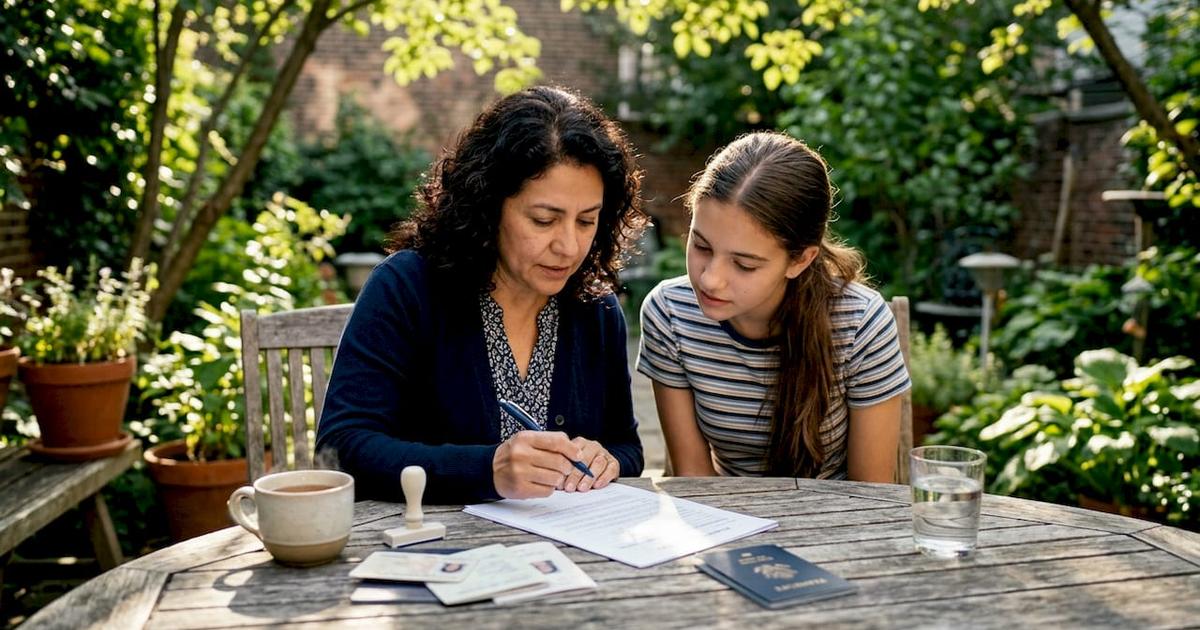
Passport authorization requires notarization to create a legally verified record of consent or identity, particularly when a parent or guardian cannot appear in person. The U.S. Department of State mandates this process to confirm that all required parties have genuinely approved a passport application, especially for minors under 16. Without notarization, a passport agency has no reliable way to confirm that an absent parent actually consented. This requirement also serves as a direct defense against international parental child abduction, making it one of the most consequential steps in the passport application process.
Why passport authorization requires notarization: the core legal reason
Notarization for passport authorization is legally required for minors under 16 when one parent cannot be present, primarily through form DS-3053, the Statement of Consent. This form must be signed before a notary and submitted within 90 days of notarization, along with a copy of the absent parent’s government-issued ID. Missing that window means the form expires and the application gets rejected. The notary’s job is not to approve the passport. The notary confirms that the person signing the form is who they claim to be.
Standard adult passport applications do not require notarization. Notarization applies mainly to specific cases involving minors and exceptional identity verifications, such as form DS-10, which is a Birth Affidavit used when a birth certificate is unavailable. That distinction matters because many travelers assume all passport paperwork needs a notary stamp. It does not. Knowing exactly when notarization is required saves time and prevents unnecessary trips.
Common situations that require notarization include:
- Minor applicants under 16 where one parent is absent from the application appointment
- Form DS-3053 (Statement of Consent) when the non-applying parent cannot appear in person
- Form DS-10 (Birth Affidavit) when a birth certificate is unavailable or unacceptable
- Certified copy affidavits when a notarized statement about a passport copy is needed for legal or institutional purposes
Pro Tip: Never sign form DS-3053 before you appear before the notary. A pre-signed form is invalid and will cause your child’s passport application to be rejected outright.
Common rejection pitfalls include submitting the DS-3053 without a photocopy of the absent parent’s ID, signing before notarization, or using a foreign notary whose authority the State Department does not recognize. Each of these errors adds weeks to the process.
What does a notary actually do with passport documents?
A notary verifies the signer’s identity and witnesses the signature. That is the full scope of the role. A notary does not confirm that the underlying document is authentic, accurate, or legally sufficient for any particular purpose.
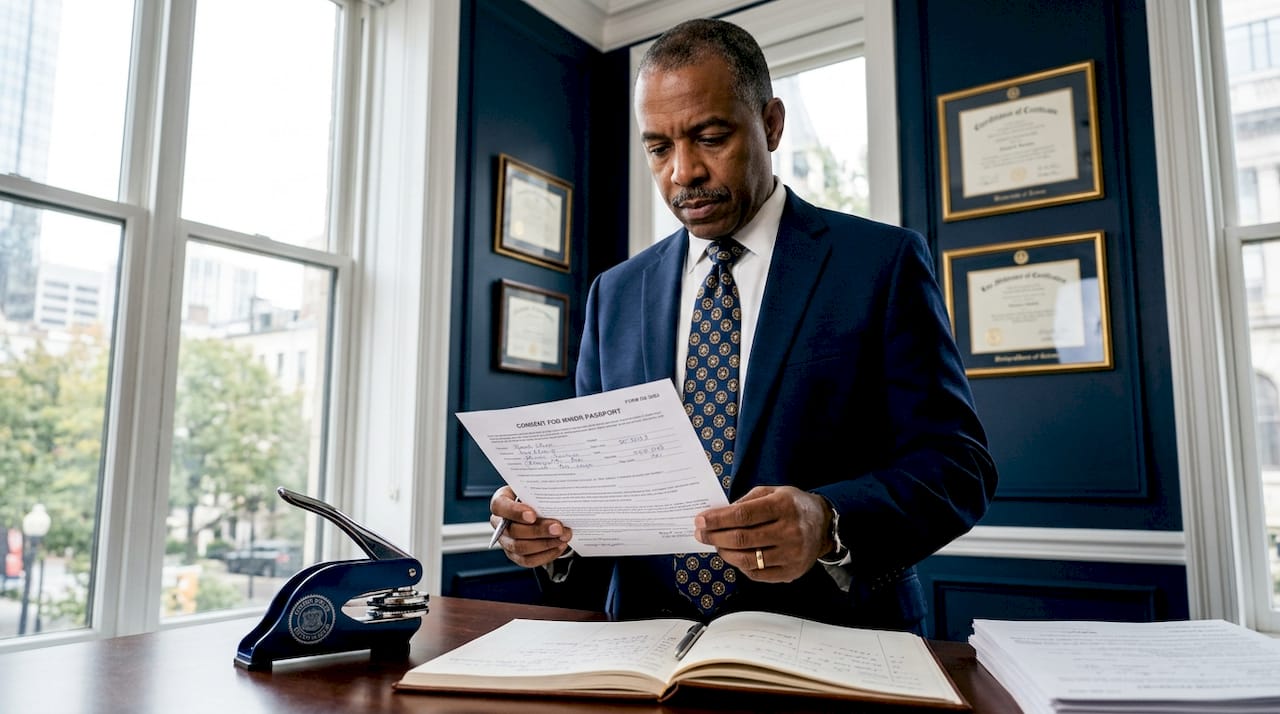
This distinction creates significant confusion around passport copies. Nearly all U.S. states prohibit notaries from certifying copies of passports because they cannot verify the passport’s authenticity. A notary has no way to confirm that a passport is genuine, only that the person presenting it appears to be who they say they are. Asking a notary to “certify” a passport copy is asking them to do something outside their legal authority.
The standard legal workaround is a process called “copy certification by document custodian.” Here is how it works:
- The passport holder writes a sworn statement declaring that the copy is a true and accurate reproduction of the original.
- The passport holder signs that statement in front of a notary.
- The notary notarizes the signature on the sworn statement, not the passport copy itself.
- The notarized statement and the copy are submitted together to the requesting institution.
“A notary’s role is limited to verifying identity and witnessing signatures, not confirming document legitimacy. Confusing these two functions is the most common source of errors in passport-related notarization.”
Typical notary fees range from $5 to $20 per signature, and most appointments take 15–30 minutes. Remote Online Notarization (RON) has expanded access significantly, allowing travelers and parents to complete notarization from home using a webcam and a licensed online notary. For cross-border compliance questions, the 2026 cross-border signing checklist from SignFlow Now covers the specific legal requirements for notarizing consent forms across different jurisdictions.
How does notarization prevent international parental child abduction?
Notarization requirements for minor passports exist specifically to create a verified paper trail of both parents’ approval. The U.S. Department of State enforces this requirement as a direct child protection measure. Without a notarized consent form, a passport agency cannot confirm that the non-applying parent has agreed to the child traveling internationally.
The practical effect is significant. A parent who wants to take a child abroad without the other parent’s knowledge cannot simply apply for a passport and walk out with it. The notarized consent requirement creates a legal checkpoint that requires documented, verified approval from both parents in most cases.
Key facts about how this safeguard works:
- Both parents must consent unless a court order, sole custody documentation, or death certificate removes that requirement.
- Notarized DS-3053 forms expire after 90 days, preventing a parent from using an old form to obtain a passport months or years later without the other parent’s current knowledge.
- Court orders granting sole custody can substitute for the absent parent’s notarized consent, but the court order itself must be submitted with the application.
- Parents living abroad must use a U.S. notary or visit a U.S. embassy or consulate to complete valid notarization. Foreign notarizations are typically rejected by State Department passport agencies.
Separated parents and parents in custody disputes face the most friction in this process. If one parent refuses to sign the DS-3053, the applying parent must obtain a court order before the passport can be issued. That legal requirement is not a bureaucratic inconvenience. It is the protection working as intended.
How to get passport-related documents notarized correctly
Getting notarization right the first time prevents delays that can stretch from days into weeks. The process is straightforward when you follow the correct sequence.
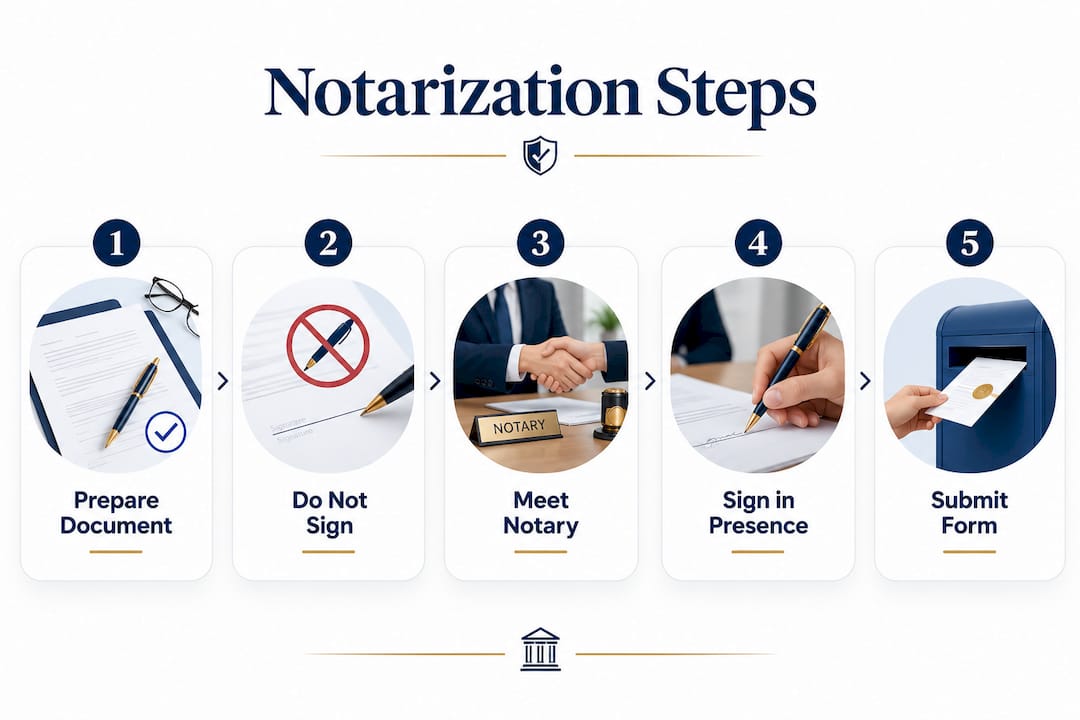
Identify the right form first. Most parents need form DS-3053. If a birth certificate is unavailable, form DS-10 applies. Confirm which form your situation requires before scheduling a notary appointment.
Gather your documents before the appointment. Bring the following:
- A valid, government-issued photo ID (driver’s license or passport)
- The unsigned DS-3053 or other required form
- A photocopy of the absent parent’s government-issued ID to attach to the form
- Any supporting documents such as court orders or custody agreements
Do not sign the form in advance. The notary must witness the signature. A pre-signed form is invalid and will be rejected.
Choose the right notary. For DS-3053, notarization must be done by a U.S. notary or at a U.S. embassy or consulate. If you are abroad, contact the nearest U.S. embassy to schedule a notarization appointment. Foreign notaries are not accepted.
Pro Tip: If you are using Remote Online Notarization (RON), confirm that the passport agency or institution accepting your documents recognizes RON-notarized forms. Not all agencies do, and submitting an unaccepted format causes the same delay as submitting no notarization at all.
The table below summarizes the key forms and their notarization requirements:
| Form | Purpose | Who signs | Notarization required |
|---|---|---|---|
| DS-3053 | Parental consent for minor passport | Absent parent | Yes, U.S. notary or embassy |
| DS-10 | Birth affidavit when no birth certificate | Applicant or parent | Yes, U.S. notary |
| Custodian affidavit | Certifying a passport copy | Passport holder | Yes, any licensed notary |
For guidance on notarizing child travel documents more broadly, Premier Notary & Apostille Services offers a complete guide to child travel documents covering consent forms, legal requirements, and common errors to avoid. If your situation involves a notarized affidavit for a passport copy, the affidavit notarization booking page at Premier Notary & Apostille Services walks you through the process step by step.
Key Takeaways
Passport authorization requires notarization because it creates a legally verified record of consent that passport agencies can rely on, especially when a parent is absent or a child’s identity needs confirmation.
| Point | Details |
|---|---|
| Notarization is required for minors | Form DS-3053 must be notarized when one parent cannot appear at the passport appointment. |
| Forms expire after 90 days | A notarized DS-3053 must be submitted within 90 days or the application will be rejected. |
| Notaries verify signatures, not documents | A notary confirms who signed, not whether the underlying document is authentic. |
| Foreign notarizations are rejected | DS-3053 must be notarized by a U.S. notary or at a U.S. embassy or consulate. |
| Notarization deters child abduction | The verified consent requirement creates a legal checkpoint that prevents unauthorized international travel by minors. |
What working with passport notarization has taught me
The single biggest source of errors I see is the assumption that any notary can handle any passport-related document. That is not how it works. A notary at a bank or shipping store may be perfectly qualified to notarize a DS-3053, but they cannot certify a passport copy. Those are two completely different acts, and conflating them leads to rejected applications.
The second most common mistake is signing the form before the appointment. People fill out the DS-3053 at home, sign it, and then bring it to the notary. The notary cannot legally notarize a signature they did not witness. The form has to be redone, and if the travel date is close, that delay becomes a real problem.
For parents abroad, the embassy route is non-negotiable. I have seen families try to use local foreign notaries because it seemed faster or cheaper. The State Department rejects those forms consistently. The only valid options are a U.S. notary or a U.S. embassy or consulate appointment. Book the embassy appointment early because wait times can be several weeks in some locations.
One more thing: always verify with the receiving agency whether they accept Remote Online Notarization before you use it. RON is legal and valid in most states, but not every passport acceptance facility recognizes it yet. A quick phone call before your appointment prevents a wasted trip.
— Premier
Passport document notarization, handled correctly
Notarizing passport authorization documents requires getting the details right. The wrong notary, a pre-signed form, or an expired DS-3053 can delay a child’s passport by weeks.

Premier Notary & Apostille Services has processed over 1,900 documents with a 5-star rating from Google reviews. The team handles DS-3053 forms, birth affidavits, and custodian affidavits with same-day processing options and a guided intake process that prevents the most common errors. Transparent pricing and experienced notaries mean you know exactly what to expect before your appointment. Book passport document notarization with Premier Notary & Apostille Services and get it done right the first time.
FAQ
Why does a minor’s passport require notarization?
Notarization for minor passports is required to verify that both parents have consented to the application. The U.S. Department of State mandates form DS-3053, notarized by a U.S. notary or embassy, when one parent cannot appear in person.
Can a notary certify a copy of a passport?
Nearly all U.S. states prohibit notaries from certifying passport copies directly. The accepted method is a “copy certification by document custodian,” where the passport holder signs a sworn statement before a notary confirming the copy is accurate.
How long is a notarized DS-3053 valid?
A notarized DS-3053 is valid for 90 days from the date of notarization. The form must be submitted to the passport agency within that window, or the application will be rejected and a new form will be required.
Can I use a foreign notary for a U.S. passport consent form?
Foreign notaries are not accepted for form DS-3053. Notarization must be completed by a U.S. notary public or at a U.S. embassy or consulate, regardless of where the parent is located.
How much does passport document notarization cost?
Notary fees typically range from $5 to $20 per signature, with most appointments completed in 15–30 minutes. Remote Online Notarization (RON) offers a convenient alternative for eligible documents and accepted agencies.