Why Contracts Require Notarization: A Clear Guide
Why Contracts Require Notarization: A Clear Guide

Notarization is the official process of verifying a signer’s identity and willingness to sign a document, serving as a legal safeguard against fraud in specific high-stakes transactions. Understanding why contracts require notarization matters because the rules are not universal. Most everyday business agreements do not need a notary stamp to be enforceable. But for real estate deeds, powers of attorney, and affidavits, notarization is either legally mandated or practically necessary for acceptance by courts, banks, and government agencies. The National Notary Association recognizes notarization as a critical fraud-prevention mechanism, and knowing when it applies protects both individuals and businesses from costly legal disputes.
Why contracts require notarization: the core legal reason
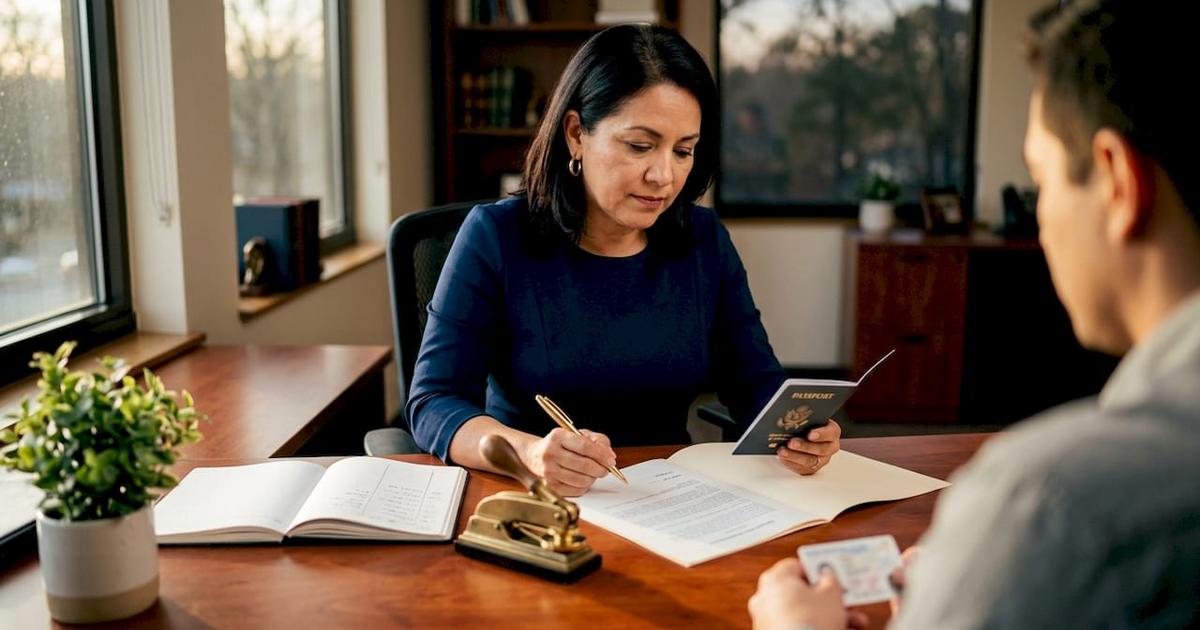
Notarization exists to verify identity and confirm willingness. A notary public confirms that the person signing a document is who they claim to be and that they are signing voluntarily. This process does not evaluate whether the contract terms are fair, legal, or well-drafted. That distinction is the most important thing to understand about business contract notarization.

The E-SIGN Act establishes that contract formation requires offer, acceptance, consideration, legal capacity, and lawful purpose. Signatures alone, including electronic ones, satisfy these requirements for most commercial agreements. Notarization adds a separate layer of authentication on top of a valid signature, not a replacement for contract fundamentals.
The Statute of Frauds requires certain contracts to be in writing but does not generally require notarization unless a separate statute demands it. That means a written, signed lease agreement is legally binding without a notary. A real estate deed, however, requires notarization because state recording statutes specifically mandate it.
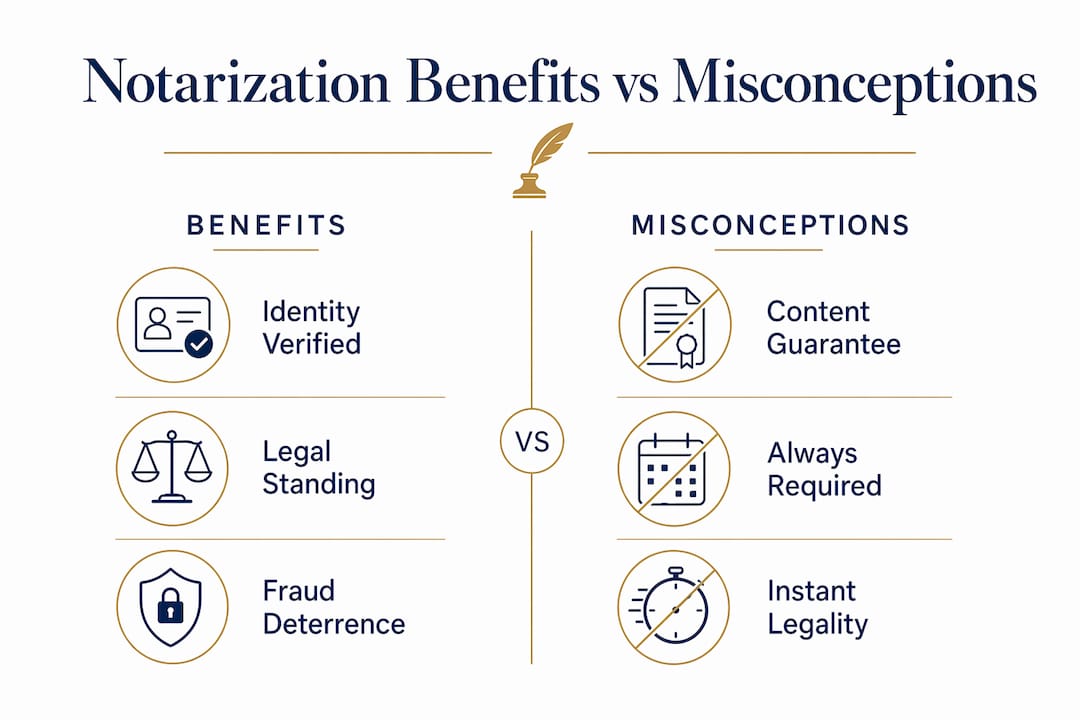
Notarization also converts a private document into one with legal standing against third parties. A notarized document prevents later challenges based on forgery or denial of signature, which is exactly why lenders, courts, and government agencies demand it for certain transactions.
Which documents legally require notarization?
State law drives most notarization requirements. The following document types are most commonly mandated:
- Real estate deeds and mortgages. County recorders reject deeds that lack notarization. An unrecorded deed can technically transfer ownership but leaves the new owner exposed to competing claims from third parties. Recording requires notarization, full stop.
- Powers of attorney. Most states require powers of attorney to be notarized for financial institutions and government agencies to accept them. Even where state law does not mandate it, banks routinely refuse unnotarized powers of attorney.
- Affidavits. An affidavit is a written statement made under oath. False statements in an affidavit can result in perjury penalties, and notarization confirms the signer’s identity and intent before a court or agency accepts the document.
- Wills and trusts. Many states require notarization for wills and estate documents to be self-proving, which simplifies probate.
- Divorce agreements and separation documents. Courts frequently require notarized signatures on settlement agreements to prevent disputes about authenticity.
Business contracts such as vendor agreements, franchise agreements, and partnership agreements rarely require notarization by law. However, notarizing them is a practical choice when the stakes are high or when the other party demands it as a condition of signing.
Pro Tip: If a franchise agreement or partnership agreement involves real property, licensing rights, or a power of attorney clause, notarize it. The cost is minimal compared to the legal fees of a signature dispute.
How notarization strengthens contract enforceability
Notarized documents carry a legal presumption of authenticity in court. That presumption matters enormously when a dispute arises. Without notarization, a party challenging a contract can force the other side to prove the signature is genuine, often through witnesses or handwriting experts.
| Factor | Notarized contract | Unnotarized contract |
|---|---|---|
| Presumption of authenticity | Yes, recognized by courts | No automatic presumption |
| Burden of proof | Shifts to the challenger | Rests on the party asserting validity |
| Institutional acceptance | Banks, courts, agencies accept readily | May require additional verification |
| Fraud and forgery defense | Strong, notary record exists | Weaker, relies on witness testimony |
| International use | Eligible for apostille certification | Generally not eligible |
A notarized document shifts the burden of proof in litigation, which can reduce the need for costly expert testimony. That shift is not a minor procedural detail. In a contract dispute, forcing the other side to hire a handwriting expert adds thousands of dollars in costs and months of delay.
Notarization also deters fraud before it starts. When a signer knows their identity is being verified and recorded, the incentive to forge or deny a signature drops significantly. This is why notarization prevents forgery claims and enhances the downstream utility of any agreement.
One important limit: notarization does not guarantee the contract’s content is legal or fair. A notarized contract with an illegal clause is still unenforceable. Notarization authenticates the signing event, not the substance of the agreement.
Pro Tip: Keep a certified copy of every notarized contract in a secure location separate from the original. If the original is lost or disputed, a certified copy with the notary’s seal provides strong secondary evidence.
Common misconceptions about notarization and contract validity
The biggest misconception is that notarization makes a contract “official” or “legal.” It does not. A notary public’s authority ends at verifying identity and willingness. Notaries who advise on legal content engage in unauthorized practice of law in most states.
Several other myths cause real problems for businesses and individuals:
- Myth: All contracts need notarization to be binding. The vast majority of U.S. commercial contracts do not require notarization. A signed vendor agreement or service contract is fully enforceable without a notary stamp.
- Myth: Notarization and witnessing are the same thing. Witnessing means a third party observes the signing. Notarization goes further: the notary verifies identity through government-issued ID and records the transaction in an official journal.
- Myth: A notarized contract cannot be challenged in court. Notarization creates a presumption of authenticity, but courts can still find a contract unenforceable for reasons unrelated to the signature, such as fraud in the inducement, lack of capacity, or illegal subject matter.
- Myth: Notarization is only for individuals. Businesses notarize commercial contracts, corporate resolutions, and loan documents regularly. Commercial notarization covers a wide range of business documents.
Understanding these limits helps you use notarization as the targeted legal tool it is, rather than treating it as a blanket guarantee of contract validity.
Practical steps for businesses and individuals
Knowing when and how to get a contract notarized saves time and prevents rejection by institutions.
-
Identify whether notarization is legally required. Check your state’s recording statutes for real estate documents. Confirm whether your power of attorney or affidavit must be notarized under state law. For affidavit notarization, requirements vary by court and agency.
-
Prepare your documents before the appointment. Do not sign the document before meeting the notary. The notary must witness the signing. Bring a valid government-issued photo ID. If the document has multiple pages, keep them assembled and intact.
-
Choose the right notary for your document type. Real estate closings benefit from a notary experienced with real estate documents. Powers of attorney and wills require a notary familiar with estate planning formalities.
-
Consider remote online notarization (RON). Electronic notarization uses digital identity verification and video conferencing to complete the process remotely. RON carries the same legal weight as in-person notarization in many states and is accepted for most document types.
-
Plan for international use. If a notarized document will be used in another country, it likely needs an apostille. An apostille is a certification that authenticates the notary’s credentials for international document use. The Hague Convention governs apostille requirements across member nations.
-
Keep notarized originals secure. Store originals in a fireproof safe or with a trusted attorney. For critical agreements like partnership agreements or real estate deeds, maintain both a physical and digital certified copy.
Pro Tip: For passport-related documents, review the passport notarization requirements before your appointment. Missing a specific form or ID type is the most common reason for rejection.
Key Takeaways
Contracts require notarization primarily to verify signer identity and create a legal presumption of authenticity, not to validate the content or fairness of the agreement itself.
| Point | Details |
|---|---|
| Notarization verifies identity, not content | A notary confirms who signed and that they signed willingly; contract terms remain your responsibility. |
| Specific documents require it by law | Real estate deeds, powers of attorney, and affidavits are the most common legally mandated categories. |
| Notarization shifts the burden of proof | In court, the challenger must disprove authenticity rather than the signer having to prove it. |
| Most business contracts do not require it | Vendor, franchise, and partnership agreements are enforceable without notarization unless a statute or party demands it. |
| International use requires an apostille | A notarized document used abroad needs apostille certification under the Hague Convention. |
What I’ve learned from processing over 1,900 notarized documents
The most consistent mistake I see is people treating notarization as an afterthought. They draft a contract, both parties sign it, and then they ask about notarization. At that point, the document must be re-signed in front of a notary, which creates delays and sometimes requires tracking down a party who has already left the state.
The second most common issue is over-notarizing. Businesses sometimes notarize every contract out of caution, which wastes time and money on documents that carry full legal weight with a simple signature. The cost-benefit calculation is straightforward: notarize when the law requires it, when an institution demands it, or when the value of the agreement makes fraud prevention worth the small additional cost.
The documents people most often overlook are corporate resolutions and loan guarantees. These are not glamorous, but they are frequently required by banks and investors, and an unnotarized version gets rejected at the worst possible moment, usually during a closing or funding round.
One more thing: notarization is a preventive tool, not a legal remedy. It does not fix a poorly drafted contract. Get the contract reviewed by an attorney first, then notarize it. Reversing that order is a mistake I see regularly, and it is entirely avoidable.
— Premier
Notarization services for your contracts and legal documents
Premier Notary & Apostille Services handles notarization for the full range of documents that individuals and businesses need authenticated, from real estate deeds and powers of attorney to affidavits and commercial contracts.

With over 1,900 documents processed and a 5-star rating on Google, Premier Notary & Apostille Services offers same-day processing and a guided intake process that walks you through every requirement before your appointment. Whether you need to book affidavit notarization for a court filing or get a real estate document notarized before a closing, the process is straightforward and supported by experienced professionals. Mobile notarization is available for clients who cannot come to an office.
FAQ
Does a contract have to be notarized to be legally binding?
No. Most U.S. commercial contracts are legally binding with a signature alone, provided they meet the basic elements of contract formation: offer, acceptance, consideration, legal capacity, and lawful purpose.
What types of contracts require notarization by law?
Real estate deeds, powers of attorney, and affidavits are the most commonly mandated categories. State recording statutes and court rules drive these requirements, not general contract law.
What does a notary actually verify?
A notary verifies the signer’s identity using government-issued ID and confirms the signer is acting voluntarily. The notary does not review or approve the contract’s terms or legality.
Is electronic notarization legally valid?
Yes. Remote online notarization uses digital identity verification and is legally valid in many states, carrying the same weight as in-person notarization for most document types.
Do franchise or partnership agreements need to be notarized?
Franchise and partnership agreements are not typically required by law to be notarized. However, notarizing them is advisable when the agreement involves real property, significant financial obligations, or a power of attorney clause.