Role of a Notary at Property Closing Explained

Role of a Notary at Property Closing Explained

The role of notary at property closing is defined as verifying signer identities, witnessing signatures, and authenticating key documents so the transaction complies with state recording laws. A notary does not provide legal advice, interpret loan terms, or suggest document changes. Their authority comes from state-level commissions governed by standards like the Revised Uniform Law on Notarial Acts (RULONA), and county recorders rely on their certification to accept deeds and mortgages for filing. Without a valid notary certificate, county recorders reject deeds and mortgages outright. That single fact makes the notary one of the most consequential people at your closing table.
What documents does a notary handle at property closing?
Not every document at closing requires notarization. The notary focuses on a specific subset of documents where state law or lender policy demands authentication. Understanding which documents fall into each category prevents last-minute surprises.
The most commonly notarized documents include the deed, the mortgage or deed of trust, affidavits of title, and any power of attorney (POA) used when a signer cannot attend in person. The notary verifies your government-issued ID, watches you sign, then applies their official seal and signature. That process is called an acknowledgment, and it confirms you signed voluntarily and are who you claim to be.
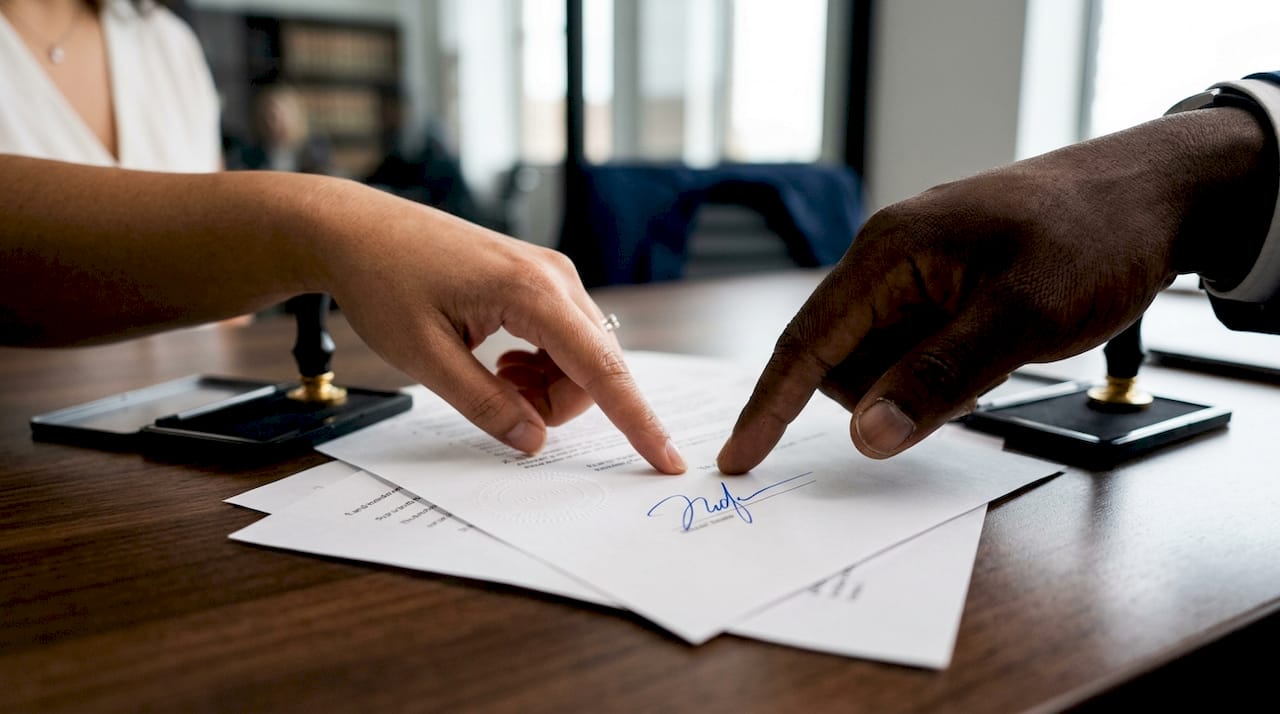
Not every document at closing needs a seal. Loan disclosures, the Closing Disclosure (CD), and most lender notices only require your signature, not notarization. The table below separates the two categories clearly.
| Document | Notarization required? |
|---|---|
| Deed (grant, warranty, quitclaim) | Yes |
| Mortgage or deed of trust | Yes |
| Affidavit of title | Yes |
| Power of attorney | Yes |
| Closing Disclosure (CD) | No |
| Loan estimate | No |
| Homeowner’s insurance authorization | No |
| Right of rescission notice | No |
POA documents carry a specific risk. Missing or stale POA documents often void the transaction and cause closing delays. The notary can verify the agent’s identity and witness the signing, but they cannot substitute for a missing or expired POA. If the original document is not present, the closing stops.
Pro Tip: Bring the original POA to closing, not a photocopy. Most county recorders and title companies require the original for recording, and a copy will not satisfy that requirement.
Errors in the notary certificate itself, such as a missing seal, wrong date, or incorrect venue, also trigger rejection. Experienced notaries familiar with real estate document requirements catch these issues before the package leaves the table.
How does the notary coordinate with escrow and title professionals?
The notary does not operate independently at closing. Escrow officers arrange for notaries to sign final packages, treating the notary as part of the escrow workflow rather than a separate party. That distinction matters because it clarifies who is responsible for what.
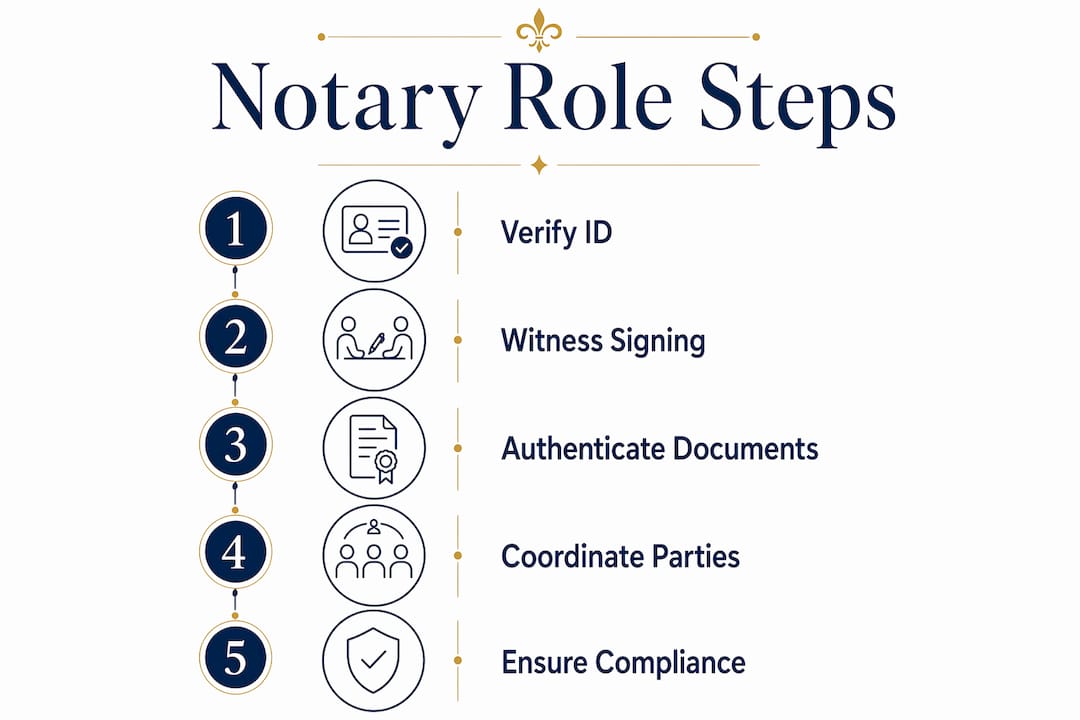
The escrow officer manages overall transaction compliance, confirms all conditions are met, and prepares the final document package. The notary then executes that package with the signers and returns it for recording. Think of the escrow officer as the project manager and the notary as the quality control checkpoint at the final stage.
A typical coordination sequence looks like this:
- Escrow officer confirms all lender conditions are satisfied and issues the “clear to close.”
- Title company prepares the document package and sends it to the notary.
- Notary schedules the signing appointment with all parties.
- At the table, the notary verifies IDs, witnesses signatures, and applies the seal.
- Notary returns the executed package to escrow or title for review.
- Title company submits the deed and mortgage to the county recorder.
Notary coordination via technology fills a large operational gap in title production, reducing delays and operational costs. Scheduling software, real-time document tracking, and digital checklists now allow title companies to monitor signing status without phone calls. That reduces the risk of a package sitting unreviewed overnight.
Pro Tip: Ask your escrow officer who the notary reports to and how document issues get escalated. Knowing the chain of communication before closing day saves significant time if a problem surfaces at the table.
The notary is often the last contact before funding, responsible for quality control of executed documents. That position makes their attention to detail directly tied to whether your loan funds on time.
What limitations does a notary have in property closings?
Notaries have a clearly defined scope, and staying within it protects everyone at the table. Notaries are prohibited from interpreting documents or advising signers on legal matters to avoid unauthorized practice of law. That boundary is not optional.
Here is what a notary cannot do at your closing:
- Explain what your interest rate means or whether your loan terms are favorable.
- Advise you on whether to sign or not sign any document.
- Alter, correct, or suggest changes to any document in the package.
- Tell you which notarial act (acknowledgment vs. jurat) your document requires. That is a legal decision.
- Represent either the buyer or the seller in any capacity.
Notaries may explain the difference between an acknowledgment and a jurat as notarial acts, but advising on document content remains prohibited. If you have questions about your loan terms, your lender answers them. If you have questions about the legal effect of a document, a closing attorney or real estate attorney answers them.
The distinction between a notary, a closing attorney, and a settlement agent confuses many buyers. A closing attorney reviews documents for legal accuracy and can advise you. A settlement agent coordinates the financial side of the transaction. The notary authenticates signatures. These are three separate functions, and in many states, all three are present at the same closing.
Pro Tip: Verify that your notary holds a Notary Signing Agent (NSA) certification from a recognized body. NSA-certified notaries complete additional training on loan document packages and are better prepared for real estate closings than general notaries.
What are common challenges and mistakes involving notaries in real estate closings?
Notary-related mistakes are a leading cause of closing delays. Delays can trigger per diem penalties and contractual risks in purchase transactions. Knowing the most common errors lets you prevent them before they cost you money.
The five most common mistakes are:
- Missing or expired POA. The signer’s agent arrives without the original power of attorney, or the document has expired. The closing cannot proceed until the issue is resolved, which may take days.
- Incorrect signer identification. The name on the ID does not match the name on the documents. Even a middle name discrepancy can cause a county recorder to reject the deed.
- Split signing errors. Split signings require precise scheduling and document handling across multiple states to avoid recordation failures caused by document chain-of-custody breaks. When one party signs in California and another in Texas, the package must travel correctly between both notaries.
- Incomplete notary certificates. A missing seal, wrong county, or blank date field causes the county recorder to reject the filing. The notary must then re-execute the document, which delays recording.
- Hiring an unqualified notary. A general notary unfamiliar with mortgage documents may miss required signatures or notarize the wrong pages, triggering lender rejection.
Poorly managed split signings risk chain-of-custody gaps that lead to recording rejection. This is especially relevant for real estate investors who close on multiple properties simultaneously or purchase properties remotely. Coordinating a notary for multiple closings requires a notary service with documented experience in multi-location transactions, not just a general mobile notary.
Pro Tip: For complex transactions involving remote signers or multiple properties, use a professional notary service with a dedicated intake process and real-time document tracking. Premier Notary & Apostille Services has processed over 1,900 documents and maintains a 5-star rating, which reflects the kind of consistency that complex closings demand.
You can also review a detailed breakdown of common notarization mistakes to prepare your document checklist before closing day.
Key takeaways
The notary’s role at property closing is to authenticate signatures and documents, not to advise, interpret, or alter them. That boundary protects buyers, sellers, and lenders equally.
| Point | Details |
|---|---|
| Notary scope is authentication only | Notaries verify IDs, witness signatures, and apply seals. They do not advise on legal or financial matters. |
| Key documents require notarization | Deeds, mortgages, affidavits, and POAs must be notarized. Loan disclosures and estimates do not. |
| POA errors stop closings | Missing or expired original POA documents void the transaction and cause significant delays. |
| Notary works within the escrow team | The escrow officer manages compliance; the notary executes and quality-checks the final document package. |
| Hire experienced notaries for complex deals | Split signings and investor transactions require notaries with documented real estate experience. |
What I’ve learned about notaries after processing thousands of real estate documents
Most buyers arrive at closing thinking the notary is there to explain their paperwork. That misunderstanding creates friction at the worst possible moment. The notary’s impartiality is actually their most valuable asset. They are not on your side or the lender’s side. They are there to confirm the process happened correctly, and that neutrality is what makes the notarization legally meaningful.
The cases that go wrong almost always share one pattern: someone expected the notary to fill a role that belongs to an attorney or lender. A buyer asks whether they should sign a document they do not understand. The notary cannot answer that. The closing stalls. The lender’s rate lock expires. Fees accumulate. All of it was preventable with one phone call to the right person before closing day.
Technology is changing how notaries coordinate with escrow and title teams, and that change is genuinely positive. Real-time tracking and automated scheduling reduce the communication gaps that used to cause overnight delays. But technology does not replace the judgment of an experienced notary who catches a missing seal or a name mismatch before the package leaves the room.
Buyers and investors who prepare specific questions for their lender and attorney before closing, and who understand that the notary’s job is procedural rather than advisory, close faster and with fewer surprises. That preparation is not complicated. It just requires knowing who does what.
— Premier
Premier Notary & Apostille Services: real estate closing support you can count on
Real estate closings move fast, and one notarization error can delay recording by days or trigger lender penalties.

Premier Notary & Apostille Services brings over 1,900 processed documents and a 5-star Google rating to every closing. Their experienced notaries know which documents require notarization, how to handle POA verification, and how to coordinate with escrow and title teams without slowing the process down. Same-day processing options mean you are not waiting when timing matters most. Book your real estate notarization directly online, or schedule affidavit notarization for specific closing documents. Transparent pricing and a guided intake process mean no surprises on closing day.
FAQ
What does a notary do at a property closing?
A notary verifies the identity of all signers, witnesses the signing of key documents like the deed and mortgage, and applies their official seal to authenticate the transaction. They do not provide legal advice or explain document terms.
Which documents at closing must be notarized?
Deeds, mortgages or deeds of trust, affidavits of title, and powers of attorney require notarization. Loan disclosures and the Closing Disclosure do not require a notary seal.
Can a notary explain my loan documents to me?
No. Notaries are prohibited from interpreting documents or advising on legal or financial matters. Direct those questions to your lender or a real estate attorney before closing day.
What happens if my power of attorney is missing at closing?
A missing or expired original POA typically voids the transaction and causes closing delays. Bring the original document, not a copy, and confirm its validity with your title company before the closing date.
What is a split signing and why does it matter?
A split signing occurs when parties sign in different locations, often different states. Poorly coordinated split signings create chain-of-custody gaps that cause county recorders to reject the filing, so experienced notary coordination is required.