Dual Citizenship Guide: Document Authentication & More
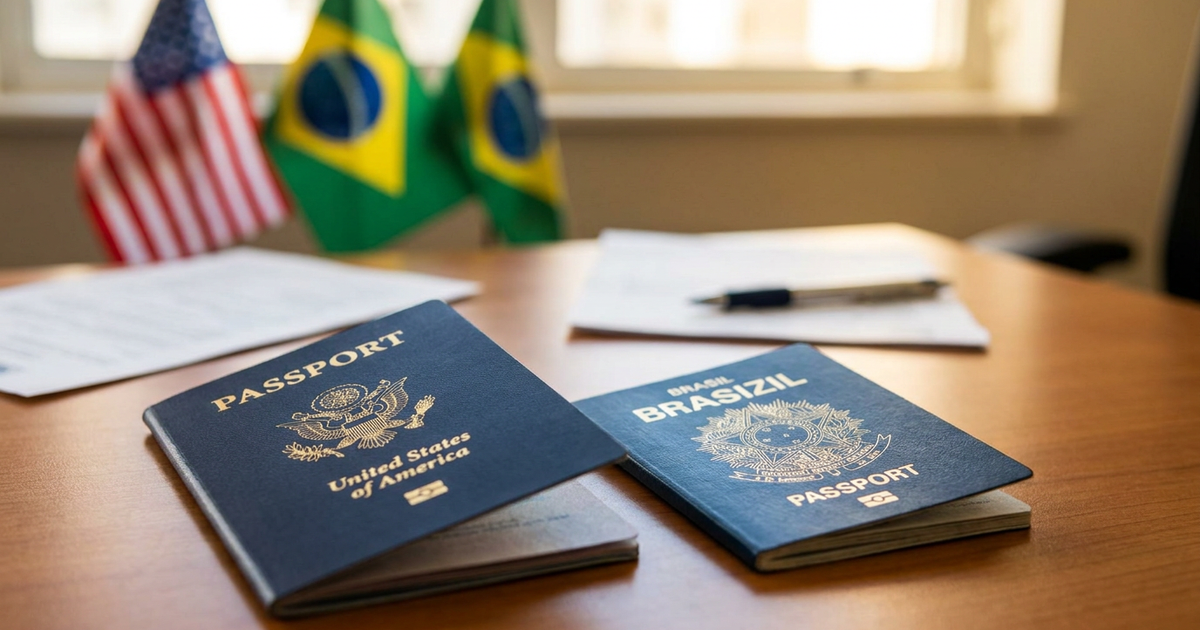
Navigating the Path to Dual Citizenship
The dream of holding two passports is more popular today than ever before. Whether you are reconnecting with your ancestral roots, seeking better global mobility, or investing in a second home abroad, dual citizenship offers a world of personal and professional opportunities. However, the journey toward becoming a dual national involves a complex web of legal requirements and administrative procedures.
One of the most significant hurdles applicants face is the preparation of international paperwork. It is not enough to simply have your birth certificate or marriage license in hand; you must ensure these documents are legally recognized by a foreign government. This is where professional notary services and the process of document authentication become essential components of your application strategy.
In this comprehensive guide, we will break down the essential steps for preparing your dossier. From understanding the basics of eligibility to mastering the apostille process, we aim to provide you with the clarity needed to navigate international bureaucracies with confidence. By the end of this article, you will have a clear roadmap for securing your future as a global citizen.
Understanding the Legal Requirements for Dual Nationality
Before you begin gathering paperwork, it is vital to understand the legal framework of the country where you are seeking citizenship. Requirements vary significantly between nations, such as Italy, Ireland, Mexico, or the Philippines. Some countries follow the principle of jus sanguinis (right of blood), while others follow jus soli (right of soil).
Most applications require a rigorous verification of your identity, your lineage, and your criminal record. For these documents to move from one country to another, they must undergo a formal vetting process. This often starts with notary services to verify the identity of the person signing the document or to certify a true copy of an original record.
- Research the specific citizenship laws of your target country.
- Confirm if your home country allows you to hold multiple citizenships.
- Identify which documents must be issued by a government agency versus those that can be private affidavits.
- Affidavits of name discrepancy or identity.
- Certified copies of passports or driver’s licenses.
- Powers of attorney for legal representatives abroad.
- Consent forms for minor children applying for citizenship.
- The document is issued by a local or state agency (or notarized).
- The document is sent to the Secretary of State or a federal authority.
- The authority attaches the certificate to the original document.
- The document is now legally valid for use in another country.
- Birth certificates for the applicant and all relevant ancestors.
- Marriage certificates and divorce decrees to prove lineage.
- Death certificates of ancestors (often required for citizenship by descent).
- Naturalization records or proof of non-naturalization from national archives.
- Criminal background checks from your current country of residence.
The Crucial Role of Notary Services in Your Application
A notary public serves as a vital first line of defense against fraud. When you are applying for dual citizenship, many of your supporting documents—such as sworn statements or copies of identification cards—must be notarized. The notary’s role is to verify the identity of the signer and ensure that the signature is given voluntarily.
It is important to find a notary who is experienced with international documents. A simple mistake on a notary block can lead to your entire application being rejected by a foreign consulate. Professional notary services ensure that the proper certificates are attached and that the notary’s commission is current and valid for document authentication at the state level.
Consider these common documents that require notarization:
Decoding the Apostille Process
Once a document is notarized or issued by a government office, it often needs a further layer of legalization known as an apostille. This is a specialized certificate issued under the 1961 Hague Convention. It simplifies the document authentication process by allowing a single certificate to be recognized by all participating member nations.
If the country you are applying to is a member of the Hague Convention, an apostille is usually sufficient to prove the authenticity of the signature and seal on the document. Common documents requiring this seal include birth certificates, marriage licenses, and FBI background checks. Without this vital stamp, your documents are essentially useless in a foreign jurisdiction.
The process usually follows this hierarchy:
Navigating Document Authentication for Non-Hague Countries
Not every country is a party to the Hague Convention. If you are pursuing dual citizenship in a nation like Canada, Vietnam, or many Middle Eastern countries, you must undergo a more rigorous document authentication and legalization chain. This process is more time-consuming and involves multiple layers of government approval.
Typically, this involves getting the document notarized, then authenticated by the state, followed by the U.S. Department of State (or the equivalent federal body in your country), and finally, the embassy or consulate of the destination country. Each step requires meticulous attention to detail and a clear understanding of the specific fees and forms required by each office.
Because this chain is so complex, many applicants choose to hire a professional service to manage the logistics. Missing even one step in the document authentication sequence can result in delays that last for months, potentially jeopardizing your citizenship timeline.
Vital Documents You Will Need to Collect
The sheer volume of paperwork required for dual citizenship can be overwhelming. Organization is key to success. Most consulates require a complete paper trail that connects you to the ancestor or the legal basis for your claim. This often means sourcing records from multiple decades or even centuries.
When collecting these items, remember that they must be official certified copies. Photocopied versions will not be accepted for an apostille. You should prepare to request fresh copies from the Department of Health or the Bureau of Vital Statistics in the municipality where the event occurred.
Commonly requested documents include:
Professional Tips for a Seamless Application
Success in obtaining dual citizenship often comes down to timing and accuracy. One of the biggest mistakes applicants make is waiting until the last minute to begin the document authentication process. Processing times for state and federal offices can fluctuate, and some consulates require documents to be issued within a specific window (e.g., within the last six months).
Always maintain a digital and physical checklist. Ensure that names are spelled consistently across all records. If there are discrepancies—such as a misspelled last name on an old ship manifest—you may need to utilize notary services to create an affidavit of one-and-the-same person before seeking an apostille.
Finally, consider the translation requirements. Most foreign governments require documents to be translated into their official language. However, the translation usually happens after the document authentication is complete, as the certification itself may also need to be translated. Always check with your specific consulate for their preferred order of operations.
Conclusion: Secure Your Global Future Today
The journey toward dual citizenship is a marathon, not a sprint. While the legal and administrative hurdles may seem daunting, they are manageable with the right preparation and professional support. By securing reliable notary services and following the correct path for document authentication, you can ensure your application remains on track and free from unnecessary delays.
Do not let the complexity of the apostille process stand between you and your goal of a second passport. Take the first step today by auditing your current documents and identifying what needs to be certified. If you need assistance with notarization or navigating the authentication maze, our team is here to provide the expert guidance you need. Contact us today to learn how we can streamline your path to a second citizenship.