Student Apostille Document Errors: Avoid Delays
Student Apostille Document Errors: Avoid Delays
The top reasons student apostille requests get rejected are mismatched signatures, wrong document type, missing notarization, and sending to the wrong authority. Run this quick check before you mail anything:
- Does the name on your document match your passport exactly?
- Is the document an official physical original or a certified copy (not a printout or digital transcript)?
- Has the correct person signed it, and did they sign in front of a notary if required?
- Are you sending it to the right office: your state’s Secretary of State or the U.S. Department of State?
- Does your destination country require a certified translation?
If any answer is “no” or “not sure,” stop. Fix it first. One wrong detail sends your entire packet back.
Key Takeaways
The single most important step is verifying that your document is a physical original or certified copy with an authorized signature before any other preparation begins.
| Point | Details |
|---|---|
| Verify the signatory | Confirm the authorized registrar or official signed the document, not a proxy. |
| Use physical originals | Digital or printed transcripts are rejected; request a sealed physical copy from your institution. |
| Match the correct authority | State documents go to the Secretary of State; federal documents go to the U.S. Department of State. |
| Check translation requirements | Confirm whether your destination country requires a certified or sworn translation before or after apostille. |
| Premier Notary & Apostille Services | Offers same-day apostille processing, guided intake, and secure handling for students with many documents processed. |
Table of Contents
- What common document errors do students make during apostille processing?
- Which educational documents do students typically need to apostille?
- How do you prepare educational documents for apostille step by step?
- Where do you get an apostille in the U.S.?
- What should you do if your apostille request is rejected?
- How Premier Notary & Apostille Services helps students avoid these mistakes
- Student apostille services: book your appointment
- Sources
- FAQ
What common document errors do students make during apostille processing?
Most rejections trace back to a short list of fixable mistakes. Here is what practitioners see most often, with a direct fix for each.
Mismatched names, dates, or signatures. Your diploma says “Michael T. Johnson” but your passport says “Michael Johnson.” That discrepancy alone will get your request returned. Check every name field against your government-issued ID before submission. If there is a mismatch, contact your registrar to issue a corrected document.
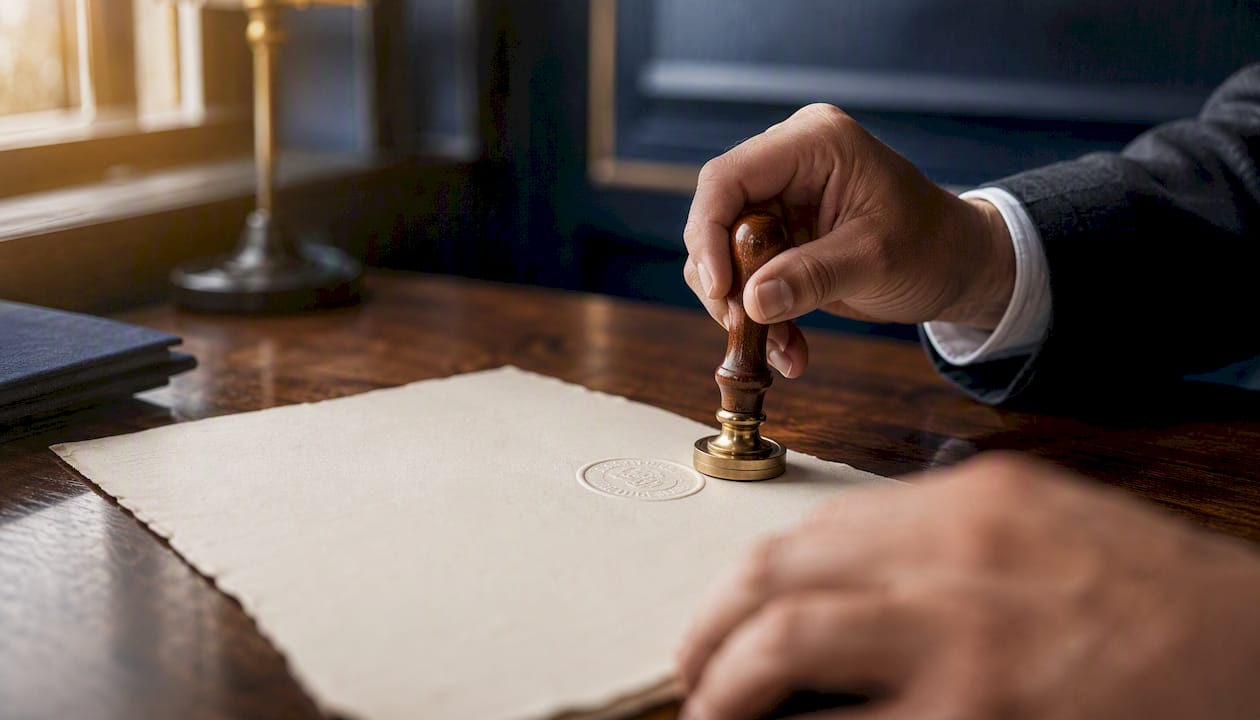
Incorrect notarization. An apostille verifies the authority of the signing official, not the document’s content. A defective notarization cannot be fixed by the apostille itself. The most common notarization errors for students: the registrar’s proxy signs instead of the authorized registrar, the signer does not appear in person before the notary, or the notarial certificate is missing required wording such as “subscribed and sworn before me.” See common notarization errors for a full breakdown of what disqualifies a certificate.
Submitting unofficial or digital-only documents. Many receiving institutions abroad will not accept digital transcripts. Most U.S. Secretaries of State require a physical document with proper certification from the school and a compliant notarization before they will process an apostille. A PDF emailed from your school’s portal does not qualify.
Sending to the wrong office. State-issued documents go to your state’s Secretary of State. Federal documents signed by a federal official go to the U.S. Department of State authentication office. Mailing a federally issued document to a state office is a frequent, avoidable mistake.
Missing or illegible seals. A raised seal that does not reproduce clearly on a photocopy, a stamp that overlaps critical text, or a perforation seal that is too faint will trigger rejection. Request a fresh certified copy if the seal on your document is unclear.
Payment and form errors. Wrong fee amount, missing cover sheet, or an unsigned request form all delay processing. Confirm the exact fee on your state’s Secretary of State website the day you prepare your packet, since fees update periodically.
Laminated documents. A laminated diploma cannot be authenticated. If your original is laminated, contact your institution for a replacement or certified copy.
Pro Tip: Before you leave the registrar’s office, ask the staff member to confirm that the signature on your transcript is from an authorized signatory and that the notarial certificate wording meets your destination state’s requirements. Fixing this on the spot takes five minutes; fixing it after mailing takes weeks.
Which educational documents do students typically need to apostille?
| Document | Original or Certified Copy | Typical Signatory | Translation Flag |
|---|---|---|---|
| Diploma / degree certificate | Original preferred; certified copy accepted by many states | Registrar or institution president | Often required for non-English destinations |
| Official transcript | Physical original with registrar signature | Registrar (must appear before notary if notarization required) | Required for most non-English-speaking countries |
| Mark sheet / grade report | Certified copy from institution | Registrar or academic records office | Varies by destination |
| Provisional certificate | Original; may need extra institutional letter | Registrar | Often required |
| School leaving certificate | Original or certified copy | School principal or records office | Required for most non-English destinations |
Transcripts are the most frequently mishandled document. The registrar must sign the physical copy, and that signature must be notarized with the registrar present before the notary. An authorized proxy signature is a common rejection trigger. Provisional certificates sometimes require an accompanying letter from the institution confirming degree conferral status, especially when the final diploma has not yet been issued.
Many countries require certified translations of educational documents, and some destinations require those translations to be notarized or sworn before or after the apostille. Check your destination country’s embassy website for the exact requirement.
How do you prepare educational documents for apostille step by step?
Follow these steps in order. Skipping or reordering them is one of the most common apostille mistakes in diploma applications.
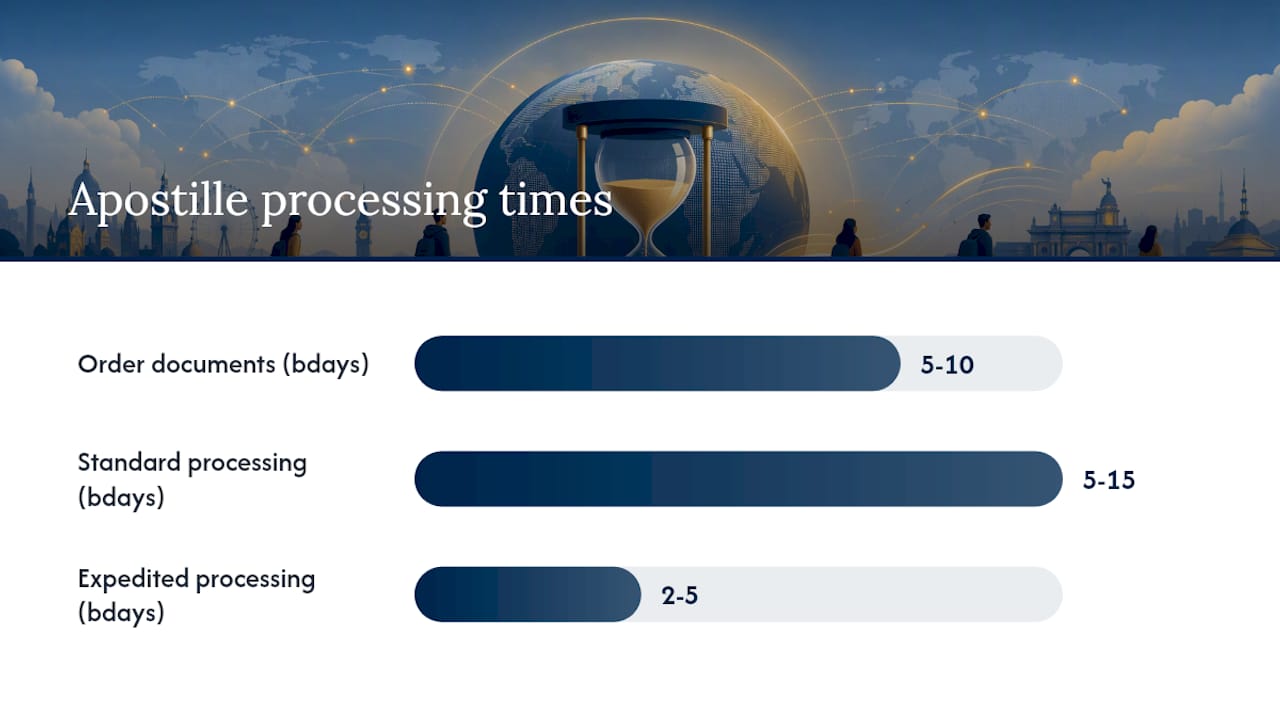
- Order official physical documents. Contact your registrar or records office and request a sealed, physical original or certified copy. Allow 5–10 business days for most institutions.
- Confirm the authorized signatory. Verify that the person signing is the registrar or another official whose signature your state’s Secretary of State recognizes. Ask for their title in writing if needed.
- Notarize if required. Some states require the registrar’s signature to be notarized before the Secretary of State will accept the document. The registrar must appear in person before the notary. Review the notarization process to understand what the notary must certify.
- Obtain certified copies if needed. If you need multiple apostilled sets, have the notary certify multiple copies at the same appointment.
- Check translation requirements. Confirm whether your destination country requires a certified or sworn translation, and whether it must be completed before or after the apostille.
- Assemble your submission packet. Include the document, a completed request form, the correct fee (check your state’s Secretary of State site the day you submit), and a prepaid return envelope with tracking.
- Submit to the correct authority. State-issued documents go to your state’s Secretary of State. Federal documents go to the U.S. Department of State.
Standard state processing runs 5–15 business days. Expedited options at many Secretary of State offices cut that to 2–5 business days, sometimes same-day for in-person drop-off. Build in at least three weeks from document order to apostille in hand if you are not using expedited service.
Pro Tip: Always include a prepaid return envelope with a tracking number. A legal document management best practice is to keep a copy of everything you send and log the tracking number before you drop the packet in the mail.
Where do you get an apostille in the U.S.?
The issuing authority depends on who signed the document and where it was issued. Apostilles apply to countries that are party to the 1961 Hague Convention. For non-Hague countries, you need embassy legalization instead of an apostille.
| Document type | Correct authority | Notes |
|---|---|---|
| State-issued diploma or transcript | Secretary of State of the issuing state | Some states require county clerk certification first |
| Federally issued document | U.S. Department of State | Applies to documents signed by federal officials |
| Notarized document | Secretary of State of the state where notarized | Notary commission must be active in that state |
| New York documents | New York Department of State | County clerk certification required for some documents before state apostille |
New York is a clear example of a multi-step process: certain documents need county clerk certification before the New York Department of State will issue an apostille. Check your issuing state’s Secretary of State website for its exact requirements. For destination countries outside the Hague Convention, the Ministry of External Affairs guidance illustrates how apostille and legalization differ, which is the same distinction U.S. students face when sending documents to non-Hague countries.
What should you do if your apostille request is rejected?
Read the rejection letter carefully. Most rejection notices name the specific defect. Match it to this list:
- Missing notarization: Return to your registrar, schedule a new notary appointment with the authorized signatory present, and resubmit.
- Wrong office: Identify the correct authority (state vs. federal), repackage, and resubmit. Do not re-notarize unless the notarization itself was defective.
- Signature mismatch or unauthorized signer: Contact your institution for a corrected document with the authorized signatory.
- Damaged, stapled, or altered document: Request a fresh certified copy from the issuer. Staples, tears, or corrections on the document face are grounds for rejection.
- Incorrect fee or missing form: Resubmit with the correct payment and a completed cover sheet.
For most corrections, expect an additional 1–2 weeks for the institution to reissue or re-notarize, plus standard processing time at the Secretary of State. If your timeline is tight, ask about expedited processing at the time of resubmission. If the rejection is from a foreign embassy or receiving institution rather than the Secretary of State, contact that embassy’s consular section directly for its specific requirements.
How Premier Notary & Apostille Services helps students avoid these mistakes
Premier Notary & Apostille Services handles in-person, mobile, and mail-in apostille processing, with same-day options for students on tight deadlines. The guided intake process walks you through document requirements before anything is signed or submitted, which catches the most common student document errors before they become rejections.
Student use cases include transcript notarization (with the registrar appearing before the notary), certified copy preparation, translation coordination, and expedited apostille submissions. With many documents processed and a high customer satisfaction rating, the team brings direct experience with the exact errors covered in this article. Secure document handling and transparent pricing mean you know what you are paying and that your originals are tracked throughout.
What the team has seen students get wrong most often
The mistake that causes the most preventable delays is not the one students expect. It is not a missing seal or a wrong office. It is starting too late. Students often request apostille processing the week before a visa application deadline, not accounting for the time needed to get a physical document from the registrar, schedule a notary appointment, and wait for state processing. By the time the rejection arrives, there is no buffer left. If you need hands-on help moving quickly, Premier Notary & Apostille Services offers same-day options that can compress that timeline significantly.
Student apostille services: book your appointment
Premier Notary & Apostille Services offers mobile notarization, same-day apostille submission, and secure mail-in handling for students who prefer professional support over navigating the process alone.
Documents are handled securely, pricing is stated upfront, and expedited options are available when your deadline is close. Book your notarization appointment to get started. The intake process confirms exactly what your documents need before you commit to a submission date.
Sources
This article provides general information about apostille procedures, not legal advice. Confirm current requirements with your state’s Secretary of State, the U.S. Department of State, and your destination country’s official sources before submitting documents.
FAQ
What are the most common apostille mistakes students make?
The most frequent errors are submitting digital or unofficial transcripts, missing or defective notarization, name mismatches between the document and passport, and sending state documents to the U.S. Department of State instead of the issuing state’s Secretary of State.
Which documents do students typically apostille for a student visa?
Common documents include official transcripts, diplomas, degree certificates, and school leaving certificates. Each must be a physical original or certified copy with an authorized institutional signature.
Can you apostille a college diploma?
Yes. A college diploma issued by a U.S. institution can be apostilled through the Secretary of State of the state where the institution is located, provided the diploma carries an authorized signature and meets that state’s certification requirements.
How do you apostille educational documents in the U.S.?
Order a physical original or certified copy from your institution, notarize it if your state requires it, then submit it with the correct form and fee to your state’s Secretary of State. Federal documents go to the U.S. Department of State. Allow 5–15 business days for standard processing, or request expedited service if your deadline is tight.
Recommended
- Back-to-school season: School docs apostille, transcript notarization, study-abroad | Premier Notary
- Apostille Document Checklist | Step-by-Step Guide | Premier Notary
- Book Apostille Service | Premier Notary & Apostille Services | Premier Notary
- Book Apostille Service | Premier Notary & Apostille Services | Premier Notary